What is the Perfume Project?

This blog is a constantly evolving forum for thoughts on perfume, perfume-making, plants (especially orchids and flora of the Pacific Northwest) and life in general. It started out chronicling the adventures of Olympic Orchids Artisan Perfumes, established in July 2010, and has expanded in other directions. A big part of the blog is thinking about the ongoing process of learning and experimentation that leads to new perfumes, the exploration of perfumery materials, and the theory and practice of perfume making. I no longer post reviews of the perfumes that I sample, unless specifically requested to do so. To counter my inherent grumpy tendencies, I try to write about something I appreciate at least once a week. Once in a while I get up on my soapbox and write about things that aren't at all related to perfumery. I am grateful to all of you, the readers, who contribute to the blog by commenting and making this a truly interactive perfume project.

Monday, May 31, 2010

REVIEW: XERJOFF PERFUMES

I had never heard of Xerjoff until I started seeing hype about their Shooting Stars collection. It turns out that they are an Italian perfume manufacturer that has been in business since 2003. I have to hand it to them. The Shooting Stars series is a unique and brilliant marketing concept. Each perfume is named for a place where a meteor fell to earth during a 1947 meteor shower that targeted Siberia with a big one. The elaborate bottles are decorated with a piece of meteorite of unspecified origin, accompanied by a “certificate of authenticity”. Authentic meteorite crumb? Haven’t I seen that in an “educational” toy store somewhere? The Xerjoff website devotes more space to describing the elegant packaging than to the stuff inside. The perfumes are outrageously expensive, presumably in part because of the artistic packaging. So are they any good?

The answer is yes, they are good. The good news (or bad news, however you want to look at it) is that even those of us who belong to the proletariat and do not have the means to afford the full gold-plated, meteorite-encrusted package can now buy a set of samples of all 12 meteorite perfumes for about the same price as any other upscale niche samples. My sample set arrived late last week, in little spray vials filled to various heights. It looks like there’s probably at least 0.7 ml in each vial, quite a bit more in some. The proof of the pudding is in the sniffing, so here goes. Are these perfumes worth $345 for 50 ml?

The first one I tried was Oesel. This is a lovely, rich, unique scent right from the beginning. It starts out as creamy vanilla and powdery, ambery, slightly leathery mimosa, quickly accompanied by bitter citrus leaves and a highly realistic citrus blossom. I don’t think it’s orange blossom, it’s more like lemon or grapefruit. I have to say that this is one of the best, freshest, most natural citrus blossom scents that I have smelled. The citrus top notes last for close to an hour, which is remarkable. Oddly, along with the naturalistic smells there is a synthetic note that reminds me Ciara, an old-fashioned US drugstore perfume. It’s pleasant enough, but seems a little out of place in such an expensive scent. By the end of the second hour it goes away. As the day wears on, the perfume becomes progressively more powdery. In the end it dries down to a powdery, musky vanilla that maintains a hint of the mimosa-like flowers. It’s an intoxicating scent that makes me want to keep sniffing and sniffing. The scent has good sillage without being overpowering. It is exceptionally long lasting, more than 24 hours on skin, 3 days or more on clothing. I am quite infatuated with Oesel, and think it would definitely be worth buying if it came in “normal” packaging, say a 5 ml mini or even a 15-30 ml spray in an inexpensive bottle. However, I can’t see paying Xerjoff’s prices just to get an outrageously expensive tchotchke made of meteorite chunks, gold plating, Murano glass, and a fancy wooden box. If I wanted that sort of thing, I could buy it separately. Maybe I’m wrong, but my guess is that if anything will be the downfall of Xerjoff, it will be their over-the-top luxury packaging, not their perfume, which seems very well-made.

Friday, May 28, 2010

AMBER AND FOSSILIZED AMBER


Amber is probably one of the most confusing terms in perfumery. It is used to refer to at least three completely different classes of scents, one of which is an accord (mixture) made of highly variable materials including benzoin, vanilla, labdanum, and a host of other things. The components of the “amber” accord can be either natural or synthetic. This accord in all its various guises is by far the most common “amber” in perfumery and is used as a base in a wide variety of perfumes, including orientals. I have formulated my own signature amber accord that I use alone when I'm craving a big dose of labdanum, or as a base in other perfumes. It seems that amber accords are often sold with the claim that they are the “essential oil of amber” even though the components have nothing to do with true amber.

“Amber” is also sometimes used to refer to ambergris, real or synthetic. My impression, from what I’ve read and from the perfumes with an ambergris note that I’ve sampled, is that ambergris has a salty, ocean-like, animalic scent that bears no resemblance to the amber accord. At some point I want to get my hands on some real, pure ambergris to try, but it’s not that easy to come by, especially on a limited budget, since it depends on sperm whales coughing it up and letting it age for a long time in the ocean before it washes up somewhere on a beach.

True amber, the one that we see in jewelry, is actually fossilized tree resin, sap secreted by plants millions of years ago and gradually petrified. Sometimes it contains insects or other inclusions. Scientists have even found bees with orchid pollen on their backs embedded in amber. Some time back I acquired a small vial of fossilized amber oil from Eden Botanicals, and have since gone on to purchase enough to use in formulating a perfume. According to their website, this oil is extracted from “Himalayan fossilized tree resin (35,000,000 years old) and found at an elevation of about 2,500 meters”. The oil is dark brown and extremely viscous. It has a distinctive smoky, slightly resinous scent that will make a unique perfume base. It’s a little like the ashes of a campfire and a little like the rosin that I remember my mother using on her violin bow. One of my current projects is to create a limited edition all-natural perfume using fossilized amber as the featured note.

The thought of wearing perfume that contains sap from long-extinct plants that grew in prehistoric times seems daunting until I think about the fact that prehistoric plant materials are burned every day in enormous quantities in petroleum products and coal. OK, so much for that mystique. I prefer to think of fossilized amber oil as a liquid jewel, the spirit of those ancient trees that shed their blood into the primordial ooze, where it turned to stone. I may call the perfume "Petrified Forest", but am open to suggestions.

Wednesday, May 26, 2010

PERFUME AND RUNNING


At this point in my life I’m what you would call a recreational runner, someone who goes out a couple of times a week and trots around the neighborhood just for the fun of being outside and staying in shape, at least at some minimal level. As I run around my neighborhood, I’m always aware of the odors that I pass through, both the bad and the good. On the bad side, there’s the choking smell of car exhaust, fabric softener spewing from people’s dryers, or the smell of the pesticides and fertilizers that people dump on their lawns to keep them an obscenely green monoculture. On the good side, there’s the smell of the occasional flower - lilacs, roses, wisteria, whatever is blooming at the moment. There’s the smell of wet dirt and vegetation during or after a rain. The smell of wood burning in stoves and fireplaces in winter. All of these odors are an integral part of the landscape that I enjoy while running.

A whole different issue is running while wearing perfume, which I have been doing more and more lately as I test and formulate scents. The other day I went running while wearing Balenciaga Cristobal, a perfectly nice vanilla-based scent. The weather was warm, and I was sweating a little. Often I don’t notice the perfume I’m wearing given that I’m moving forward, albeit at a slow pace. However, on this run the fumes of the Cristobal were rising up from my body, making me almost nauseated. Apparently vanilla is not a running-friendly scent. This has gotten me to wondering whether certain scents can not only make running more or less pleasant, but actually have the capacity to impair or enhance performance.

Over the next months I’m going to do some research and experimentation with single notes to see which ones might improve the running experience, or even promote running farther and/or faster. Stay tuned for occasional updates on what I find out. Who knows - I might even really get in shape and start racing again using my secret weapon. I'm not sure yet whether it should boost my own speed or leave my competitors gagging in my sillage! Maybe if I'm lucky it'll do both.

Tuesday, May 25, 2010

PHOTOGRAPHING PLANTS AND PERFUMES


One of the tasks I have to do as a purveyor of orchid plants and a soon-to-be purveyor of perfumes is photograph the subjects so that the buyer has a realistic visual impression of what he or she is getting. Over the years I’ve developed a set of techniques for photographing flowers and plants using an inexpensive automatic camera (Canon Powershot A520). Although many of the same principles apply, photographing perfumes and other inanimate products presents some different challenges, which I’m in the process of working through.

The first thing I quickly learned about both types of photography is that flash is the ultimate evil. I prefer to have the subject in natural light in my sunroom, preferably on a very cloudy day (the great gel in the sky, as one film person I know calls clouds). Often the clouds produce the perfect lighting conditions - medium strong uniform light, no visible shadows. Sometimes it’s too bright, so I create a “light tent” using a white drape above the subject or wait until the sun is low in the sky, behind the trees. I suppose I could go out and buy a lot of fancy lighting equipment, but so far nature and a white sheet has worked well in this respect.


My camera has a “flower” setting that I use for both orchids and perfumes. It’s a cheap and dirty substitute for a closeup lens. It works fairly well for most things except tiny flowers against a deep background.

The second thing I learned the hard way was that I need a background that isn’t shiny. Velvet would seem like the best possible drape, but if there are any folds at all they catch the light and shine. The top photo was taken against velvet, and you can see light reflecting from a small fold at the left side of the picture. The lower photo was taken against black fleece. I like black fleece for the orchids, since it isn’t reflective. The downside is that it tends to collect bits of debris, but Photoshop is a wonderful cleanup tool for this sort of thing. Nearly all flowers look wonderful against a black background, perfumes not so much. I’m currently trying a couple of different white backgrounds, a gauzy white curtain and a plain white sheet. I think the white sheet is going to be the winner.

There’s not too much I can say about composition, except that it’s something that you achieve through trial and error and trusting your eye. I often prop the orchid plants up in bizarre positions to show off the flowers to the best advantage and get the right mug shot. I drape their ugly plastic pots with black fleece. Perfumes are a little easier, since they’re not odd-shaped, sprawling about, or jiggling in the slightest breeze. I usually take a dozen shots of everything, in slightly different positions and from slightly different angles, in order to get the best possible shot. Cropping is my friend.

Photography, like everything else, is a continual learning process. As I work to get my perfumes documented for the website, I’m sure I’ll learn more about photographing that sort of still life composition and will share any interesting insights that I have.

Monday, May 24, 2010

FLEURS DE GLACE


Ice flowers - the odd and intricate ice crystal formations that appeared on the ground last winter after a hard rain and the arrival of a cold front with very low (for here) temperatures. I’ve never seen anything like these perfect roses chiseled out of ice, before or since. They were not delicate snowflakes, they were almost the size of real roses! I photographed them and tried to imagine what an ice flower would smell like. Nothing flowery or plant-like, that’s for certain. This perfume is a big departure for me, since I set out to make a formula that was entirely synthetic. I almost succeeded, but at the end I tweaked it with some naturals, galbanum and black pepper, to give it the edgy top notes that I thought it needed. Fair enough. I tweak most of my natural compositions with synthetics, so why not do the opposite?

I tried to keep it simple, with an opening that is sharp and pungent, like the pointed, knifelike edges of ice crystals or the points of snowflakes. As it dries down and the top notes disappear, it becomes a haunting, synthetic flower scent, not at all sweet and not identifiable as any real flower. At the end, the flowers melt into a soft and frothy base, like a light sherbet. Because the scent is mostly synthetic, it has great sillage and longevity. It’s probably not for everybody.

I’ve become addicted to my own creation and have been wearing it (in all of its versions) more than any of my other scents. It seems to work as a “palate-cleanser” after I’ve sampled other perfumes that are heavy and floral.

I’ll be giving away two 5-ml samples of the current version of Fleurs de Glace to the first two people who post here and express an interest in trying it.

Sunday, May 23, 2010

HOW OLD IS "TOO OLD"?

For the last several months my local supermarket has been undergoing renovations. Instead of closing the place for a few weeks and letting the workers do what they need to do, they go section by section, aisle by aisle, moving things around and closing departments temporarily. Yesterday when I was in there to buy fish, my patience came to an end when I found that the fish department was closed. An employee working nearby said that the renovations would continue until October - four more months of disruption.

I asked the depressed and apathetic-looking young girl at the checkout why the renovations were necessary - it looked like they were purely cosmetic and were doing nothing to improve the functionality of the space. I suggested that the fat cats in charge could have left the store as it was and paid her more so that I could have a smiling face to interact with at the checkout. Her reaction was one of bewilderment - I don’t think she understood the concept of prioritizing how money is spent - and her response was that the store was “too old” and remarked on how nice it would look when it was finished. Too old? They just went through the same process of renovation about 6 or 7 years ago. My response to her was, “Too old? One of these days you will be too old. Does it happen at 25? 30? 35? When will you be too old?” She actually blushed. I’m not sure why. Maybe our exchange made her think a little and it was a sudden rush of blood to fuel an inactive brain. I would like to think so.

The whole concept of being “too old” is sadly a part of our society. If a building is more than 50 years old, tear it down. If your refrigerator isn’t this year’s trendy color, send it to the dump and buy a new one. If your perfume isn’t the latest celebrity scent, throw it away. But what about the Parthenon? The 2000-year old Roman bridge in the photo? The Sistine Chapel? Picasso’s Guernica? Jean Patou’s Adieu Sagesse? Aren’t they all “too old”? Shouldn’t they be replaced with new, disposable buildings or art works, or at least renovated with the latest surface treatment? This set me to thinking about the role of quality in making things ageless, and how our society doesn’t strive for quality, but rather for the disposability that keeps consumers replacing goods all the time.

Why do we not try to produce quality creations in the hope that some of the fittest and luckiest examples will survive and still be as attractive and functional after 50, 100, 500 or 1000 years as they were when they were first made? Why do we not try to be “quality” people, so that we will never be “too old” as long as we live? Am I starting to sound like Phaedrus in Zen and the Art of Motorcycle Maintenance, ending up ranting in a corner?

The final touch of irony will be when the renovations in the supermarket turn out to be designed to make it look more like an old mom and pop market.

Saturday, May 22, 2010

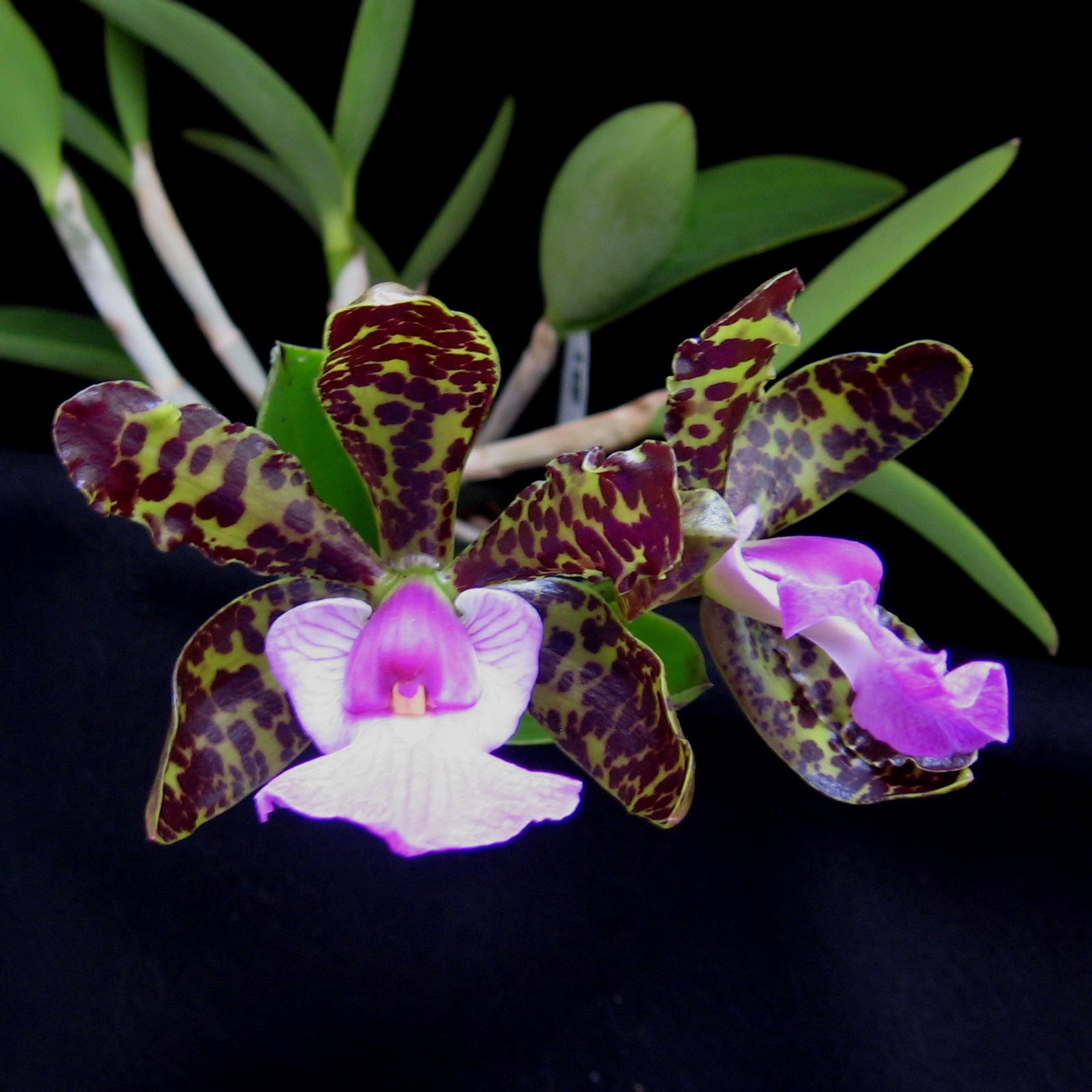
CATTLEYA ACLANDIAE


I bought as seedling of this cute little species about four years ago because I fell in love with a photo of it, and this week it’s blooming for the first time! It’s even more dramatic in person than it is in the photo, with its leopard-print petals and wide neon-fuschia lip. The big bonus is that it’s fragrant!

The fragrance gradually builds up over the first few days, and today it’s strongly citrusy with an undercurrent of indolic flowers, more like narcissus than jasmine, gardenia, or orange blossom. It also has a spicy edge that’s like ginger and some sort of pepper. I’m already thinking about how to translate this gorgeous flower into a perfume, but am curious to see how the fragrance develops over the life of the flowers.

Friday, May 21, 2010

INDIAN SARSAPARILLA


One of the items that came in my latest shipment of natural perfumery materials was the SCO2 extract of Indian sarsaparilla. There are many different herbs that go under the name “sarsaparilla”. Hemidesmus indicus, also called “Indian sarsaparilla” is different from the ones traditionally used to flavor root beer or sarsaparilla, which belong to the genus Smilax. Hemidesmus indicus is a small perennial shrub that grows throughout nearly all of the Indian subcontinent. The roots are the part used to make the aromatic extract. Like Smilax, it is traditionally used as a tea or flavoring for medicines, cold drinks, and sherbet.

It was surprising to me that a search turned up almost nothing regarding the use of this plant extract in perfumery. However, there is a wealth of information about its medical uses. In Ayurvedic medicine it seems to have been used to treat just about every ailment that can be imagined, from skin diseases to fevers, arthritis, syphilis and the bites of poisonous snakes and scorpions. It is also reputed to be an aphrodisiac. This I can well imagine after smelling it.

When I first opened up the little silver tin that it came in, I was blown away by its sweet and heady smell reminiscent of rum-laced eggnog and vanilla flavored baked goods, only better. It is supposed to contain some of the same constituents as tonka beans, hence the vanilla-like note, but it contains many other aromatic compounds as well, making the scent unique.

Of course the wheels in my brain are turning, thinking about how to showcase this wonderful natural material in a perfume. After reading about it, however, I realize that this is one of those plants that, like sandalwood, run the risk of overharvesting natural populations and eventually being wiped out. Unless Indian sarsaparilla starts being cultivated commercially, I wouldn’t feel right using it in a perfume that was part of my permanent line, but now that I have a small amount of it, I will want to share it as a limited edition natural scent so that others can experience this fantastic creation of nature. Stay tuned for updates on the formulation of a new perfume using Hemidesmus indicus as the keynote material.

Unfortunately, there are quite a few natural materials that could be put in the sad category of “smell it now, before it goes extinct”. I don't want to get started on this topic, so will save it for another day.

NEW TOYS!


I just got in a new shipment of natural perfume materials. What a treat to smell a few things I wasn’t familiar with. Over the next few days I’ll report on a few of the new items that I’m adding to my arsenal of naturals.

Wednesday, May 19, 2010

THIS WEEK'S REVIEWS


I try to sample a different perfume every day and write down my impressions of it. I always avoid reading descriptions or other reviews, hoping to have an unbiased take on it. Only after I’ve written a draft of my initial evaluation do I look at what’s been written. I’ve gotten pretty good at identifying notes, sometimes getting everything that is mentioned in the descriptions. Other times, I’m sure that I smell things that aren’t listed, and that no one else has detected, or I don’t smell things that are in the manufacturer’s list of notes. The more I sample, the more confident I get about what my nose tells me.

I try to sample all kinds of perfumes from cheap and common drugstore scents to designer fragrances, expensive niche perfumes, and obscure things that almost no one has heard of. Who knows where the gems are to be found?

To start off, here are some perfumes that I sampled this week:

Fifi Chachnil
It takes Fifi a while to develop. At first I was underwhelmed by a sweet, slightly medicinal, slightly animalic scent, and after about 10 minutes thought it was fading away. But then I started smelling a delicious sillage, soft, vanilla-y, a little rosy, all-girly, not quite like any of the other perfumes that I’ve sampled. It kept shape-shifting, sometimes more candy-like, other times more floral, but always soft and pretty. Eventually it dries down into a light amber scent that lasts for hours on the skin. This seems like the perfect scent to go with fancy retro lingerie, or with my running shorts and grubby old sweater, for that matter.

Miller et Bertaux Spiritus/Land
Starts out with a slightly camphor-like note, along with some spices, maybe cinnamon, cardamom, or ginger and aromatic herbs, probably rosemary, lavender and laurel, but all blended together expertly so that no one note stands out. I can see how this unique herbal mixture earns its name - it is meditative, spiritual, and peaceful. As it dries down, the ginger becomes more in evidence, and the scent starts smelling more “masculine” as the wood emerges. After about 4 hours, at what I thought was the end of the drydown, what was left was a dry, light, sandalwood with slightly green, herbal overtones, possibly mixed with some cedar. However, another 4 hours later, there’s a lingering rose scent. This is a quiet perfume, but a tenacious and fairly distinctive one. I like it enough to wear it from time to time, when I want something inoffensive and calm.

Stacked Style Rococo Rouge
How did I ever end up with this cute little spray vial sample? Was it sent to me in a swap? Did I order it sometime in the past? There are no reviews of it anywhere as far as a quick Google search can unearth. The Stacked Style website seems only marginally functional, as if no one had tended to it for the last 5 years. They have no descriptions of their products, possibly explaining the lack of reviews.

This seemingly obscure drugstore-type perfume starts out dominated by green tea together with plum, peach, rose, some citrus, and possibly freesia. It’s a fresh, flowery, fruity scent that’s not terribly original, but actually quite nice. It has plenty of sillage without being overpowering. The green tea note doesn’t make me sneeze. It’s fruity without being too sweet. It reminds me of drinking peach- or plum-flavored iced tea on a hot day, taking me back to road trips fueled by the Japanese plum version of Arizona Iced Tea bought at gas stations or truck stops. As it dries down, the peachy-apricot-plum notes become more prominent. I like plum, so in my opinion lots of it is a good thing.

Terri Michele Shenandoah
Goes on very light, with subtle florals and aquatic notes. I think the scent is mostly freesia, but also has a plastic-like overtone, sort of like freesia-in-tupperware or freesia rubbed on a vinyl car seat on a cool day. It’s a little too light and floral for my taste, but I can see that this might appeal to those looking for a mild, inoffensive perfume to wear to work.

Miller & Bertaux Shanti Shanti
Another perfume that surprises. The name made me expect something peaceful, maybe watery and green, with a hint of lotus, or else full of Indian temple incense, but what I get up front is strong, oily geranium and rose, like an English cottage garden gone berserk. As it starts to dry down, the rose takes over, almost as a monopoly. It’s a nice, natural-smelling rose, but so strong that it, along with the remnants of the geranium, overpowers anything else that might be in the mix.

After my initial impression, I read some of the hype about this fragrance, and really didn’t detect any of the more subtle scents that are supposed to be there. Basmati rice?? I don’t think so. I didn’t even get sandalwood, which is usually extremely prominent even if present in small quantities. As one would expect with rose and geranium, there’s lots of sillage. After a few hours, I started smelling something that I can only describe as burning roses, or the smell of a hot iron on fabric. The “hot” note is also a little bit sweaty smelling, probably from the sandalwood that’s right below the surface, never appearing by itself, but modifying the rose, or from the “basmati rice” note that could euphemistically be described as “popcorn”. Maybe a better description would be ironing clothes that have been soaked in sweat and rose perfume with an iron that’s a little too hot. This drydown probably sounds awful, but it’s really a wonderfully pleasant and unique smell that appears more in the sillage than on the skin. I liked the drydown much more than the conventional beginning, enough so to try the perfume two days in a row, with the same results. The initial punch-you-in-the-nose rose lasts a few hours, and the hot iron doing armpit touch-ups lasts all day. I still don’t know why it’s called Shanti Shanti, though.

Tuesday, May 18, 2010

WHAT IS YOUR FAVORITE ORCHID FRAGRANCE?

This is a contest for those of you who grow orchids or have encountered fragrant orchids at some point, and for those of you who have only experienced the so-called “orchid” note in perfume. Just post a comment naming your favorite fragrant orchid (the real flower) and describing its scent, or your favorite perfume that contains an “orchid” note, describing its scent. At the end of June, I’ll pick the winning entry. If there are not enough entries by then, the contest will be extended until there is some sort of quorum. If you are the winner, you will receive a gift set containing a 15 ml bottle of Red Cattleya Eau de Parfum and a matching soap. Check out the post on Red Cattleya to learn about the orchid flower that inspired the scent, the making of the perfume, and what it smells like.


Here's a picture of a miniature orchid whose name identifies it as being fragrant, Schoenorchis fragrans. The whole plant only has about a 5 cm (2 inch) leaf span, so the flowers are tiny. My plant, shown in the photo taken a couple of years ago, is blooming right now, a little jewel hanging in the sun room where I grow some of my plants. Surprisingly, the fragrance is not the traditional "orchid" note, but rather a light, fresh, green, aquatic scent. Like so many other orchids, its scent could be interpreted to make a wonderful perfume.

Monday, May 17, 2010

RED CATTLEYA


I thought it would be good to start today's post with a little bit of information about the orchid whose photo is shown in yesterday's post. One of my favorite hybrid orchids is Laeliocattleya Netrasiri. This plant is not much to look at in the summer, just a bunch of big, sprawling, succulent stems and leaves, but it miraculously bursts into bloom every year around the winter solstice with a profusion of velvety dark red flowers that are intensely fragrant. There is nothing better than these flowers to brighten up the dark, cold, rainy days of a Pacific Northwest winter. Goodbye, seasonal affective disorder! Hello tropical jungle!

Cattleya orchids are the kind that used to be used for the orchid corsages that were popular in the early to mid 20th century. Most of the orchids grown for corsage flowers were lavender or white, but cattleyas come in every imaginable color. Because they are pollinated by day-flying bees and butterflies, they are not only colorful, but emit wonderful fragrances that are strongest in the early part of the day. A few will switch to a totally different scent at night, but that’s a story for another time.

Red Cattleya was the second orchid fragrance that I attempted to formulate. The first orchid fragrance that I made was fairly simple, so I thought the scent of Red Cattleya would be just as easy to duplicate. Nothing could have been further from the truth. Most cattleyas have a characteristic soft, moist, floral, slightly fruity fragrance, but it is extremely elusive. It took many attempts to produce something that resembled the actual flower and was also wearable as a perfume. When I finally had a formula that seemed close, I considered it a major triumph. An especially nice feature of the formula that I finally came up with is that it works equally well in perfume or soap.

In terms of the scent, Red Cattleya has been described by those who have tried it as like walking into a hothouse packed with the most exotic orchid species, originally brought back by explorers from jungles all over the world. The blooming cattleyas envelop you with a cloud of soft, sumptuous fruity-floral fragrance that is incredibly sexy. The perfume notes include citrus, spices, peach, apricot, hyacinth, gardenia, violets and lilac. At the base is a dark current of musk, exotic woods and vanilla. This perfume was released for local sale in December 2009, and will be one of the signature Orchid Scents available on the website.

Watch for the upcoming orchid fragrance contest and post a comment for a chance to win a Red Cattleya gift set!

Sunday, May 16, 2010

It has to start somewhere!

Ever since I can remember I’ve been fascinated by smells - the smell of the house we lived in when I was a toddler, the smell of flowers and plants in the garden, the smell of things cooking, the smells of people with and without perfume, the smell of rain or the ocean, stones, wax crayons - anything and everything that had an odor. Once I was old enough to buy things for myself, I gradually amassed a huge collection of essential oils and whatever mainstream perfume minis were available in the shops that sold them. At that point I was more interested in opening them and sniffing them than actually wearing them.

Despite this obsession with sniffing things, my path to perfumery was not direct. In fact, it was a completely different interest that led me to it. I grow orchids commercially, selling them at local shows and through an online nursery business, Olympic Orchids. In the process of taking care of the orchids, I noticed that when they bloomed, the different varieties had completely different fragrances, and realized that they might make wonderful perfumes unlike any others that are on the market.

At first I experimented just for myself, using the essential oils that I had in my collection to try to recreate the different fragrances. It quickly became apparent that essential oils alone are not sufficient to accurately duplicate flower scents, so I started selectively tweaking with absolutes, infusions, tinctures, and synthetics to get the effects that I wanted. Once I came close, I realized that the scent of an orchid is being constantly renewed with top notes secreted by the flower, something that cannot happen in a perfume that’s only applied once and allowed to evaporate. This meant that I had to adapt the orchids’ scents to create perfumes with a traditional top, middle and base note structure. It’s been a long process of experimentation and learning, but I now have a basic set of orchid-inspired perfumes as well as a good many others. My general philosophy is to use natural materials whenever possible, resorting to synthetics only when nothing else will work.

It’s exciting to write the first post for my blog, and look forward to posting on a near-daily basis.