What is the Perfume Project?

This blog is a constantly evolving forum for thoughts on perfume, perfume-making, plants (especially orchids and flora of the Pacific Northwest) and life in general. It started out chronicling the adventures of Olympic Orchids Perfumes, established in July 2010, and has expanded in other directions. A big part of the blog is thinking about the ongoing process of learning and experimentation that leads to new perfumes, the exploration of perfumery materials, the theory and practice of perfume making, the challenges of marketing perfumes and other fragrance products, and random observations on philosophy and society. Spam comments will be marked as such and deleted; any comments that go beyond the boundaries of civil discourse will also be deleted. I am grateful to all of you, the readers, who contribute to the blog by commenting and making this a truly interactive perfume project.

Showing posts with label Ensar Oud. Show all posts

Saturday, December 28, 2013

“BEST OF 2013” LIST


It seems to be a customary end-of–the-year ritual for bloggers to make their “best of” lists. I’m not sure I could do that because singling out one thing as “best” automatically relegates a whole host of other equally good things to the category of “second-best” or “not so good”, depending on how you look at it. So this is not my “best of” list, it’s a list of random things in different categories that I enjoyed and/or discovered in 2013.

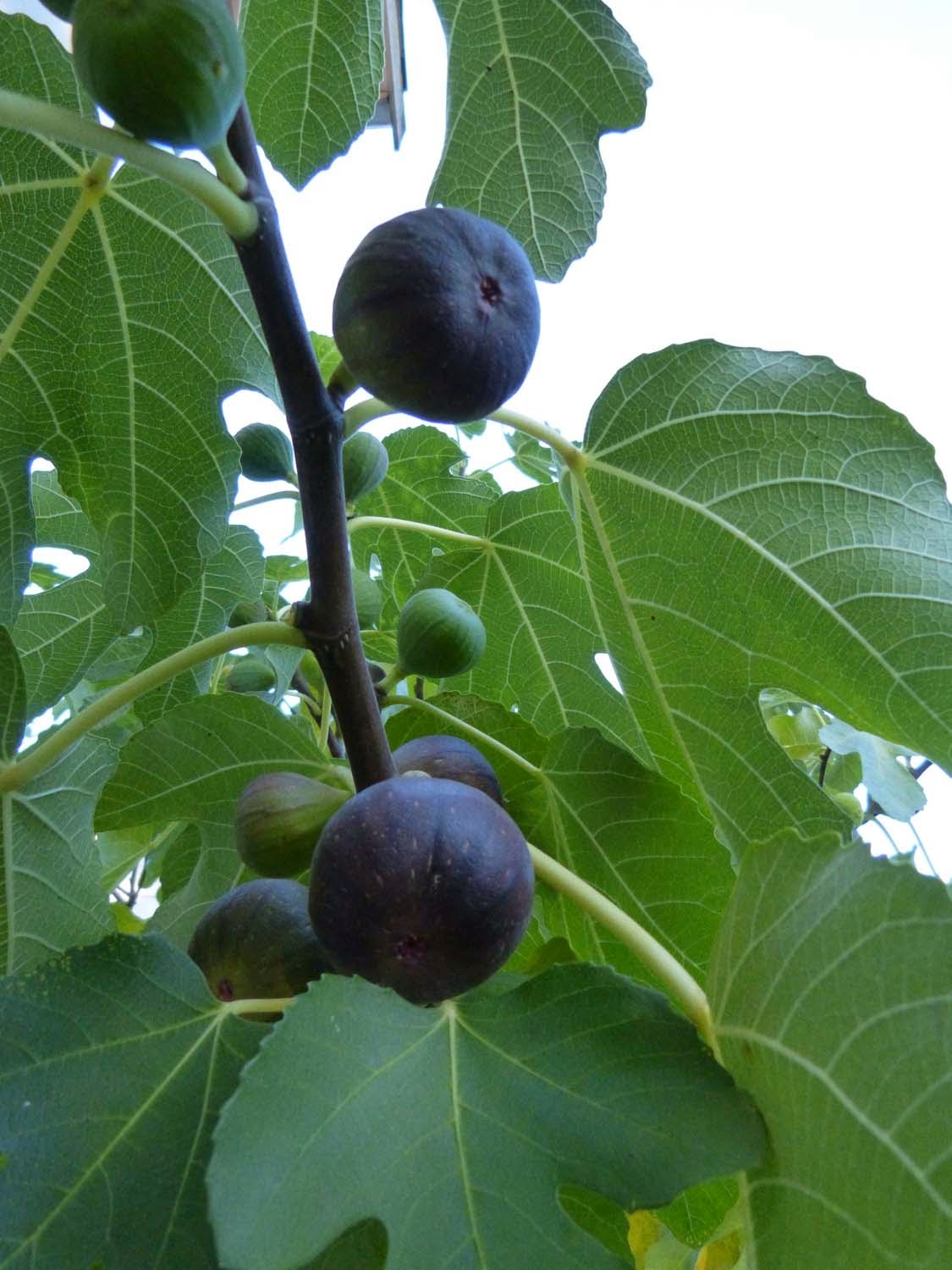
Fruit: The second crop of Brown Turkey figs (higos) that appeared on our tree this fall by the hundreds. They were the biggest, juiciest, sweetest figs I’ve ever eaten. I highly recommend this variety of fig tree.

Cat: Our Maine Coon cat, Jasper, has just completed his first year with us, and settled in nicely. He has all of the good features of a dog and none of the bad ones. He comes when he’s called, follows us around without being needy, wakes me up in the morning with a gentle mew and pat on the face, and comes and goes as he pleases, occasionally catching a rat or mouse.

Drink: The home-brewed ginger kombucha that one of Michael’s relatives gave us last week. It’s fizzy, it’s tasty, and it’s got to be good for you! I may try brewing some myself.

Tincture: The tincture made with dried fig leaves turned out wonderfully sweet and tonka-like. I'm going to use it in a perfume this year. 

Orchid: Laelia rubescens, with its big snowballs of purple-throated white flowers on crazy long stalks. It’s blooming now, with an interesting fragrance reminiscent of Ben-Gay, a sports rub that contains methyl salicylate. The photo is from a couple of years ago. This year it has two big spikes, each with a dozen flowers. To pollinate or not to pollinate, that is the question. 

Perfume show: The San Francisco Artisan Fragrance Salon sponsored by Taste TV is quickly becoming the premiere perfume event on the West Coast. It’s grown and prospered since its inception at a small art gallery two years ago, and will take place for the third time on March 15, 2014, with nearly two dozen participants, including Olympic Orchids.
 
Oud: Chinese Exclusive from Ensar Oud. To me, this is the prototype of oud, the ultimate woody fragrance. It’s an indescribable scent to meditate to, sleep on, or just inhale for pure pleasure.

Perfume discovery: A long-neglected and untried sample of Complex by Boadicea the Victorious. For the first few hours I imagined it as being what an ancient, defunct cave-dwelling would smell like, discovered during the clear-cutting of a hillside evergreen forest, complete with the dark mineral scent of the rock walls, the slightly sooty scent of old fires long extinguished, and the pungent smell of mortally wounded trees and herbs all around. A lot of people who post reviews seem to hate it with a passion. All the more reason to love it.

Bird sighting: A few days ago we walked down to the park at the bottom of the hill, where we heard some excited chirping. When I looked down, there were two of the cutest little birds I’ve ever seen, scratching in the leaves. They were a patterned olive color with bright, broad, neon-yellow stripes on their heads. Both birds seemed to have no fear, approaching us as if they were curious to see what we were doing, looking up at us. Back at home I looked them up and discovered that they were golden-crowned kinglets. I don’t recall ever seeing these birds before even though they must be native. 

Natural sound: The sound of palm-leaves rattling in the wind. It’s somehow disturbing and reassuring at the same time.  

I could keep going all day, so that’s probably enough of a “best-of ” list for one post. What are some random things that you enjoyed in 2013? 

[All photos are mine except for the golden-crowned kinglet, which is adapted from Wikimedia] 

Saturday, February 9, 2013

OUD FEST II


Today we have a guest post by GAIL, who is my accomplice in oud sampling. Here's what she writes:


We are still working on sampling what we believe are real oud oils, so Oud Fest II was devoted to sampling four medium-priced (for real oud!), fine quality oils from Assam.

Ensar Oud: Assam Organic
The first sample, Ensar Oud's dark golden, honey-like "Assam Organic", was applied to the left wrists of the participants. It opened with a scent of bright, fermented wood and the smell of a clean milk-house (a combination of sweet hay, milk, caramel and manure). At five minutes the milk-house and fermented wood vanished leaving an impression of purple plastic and camphor that morphed into the scent of oat bran and brewing mash. About twenty minutes into the test "Assam Organic" suddenly took on the odor of an open third world drain or gutter with a relatively strong sillage.  This phase persisted for about twenty minutes, eventually thinning to a cloud of sulfurous smog.  After about an hour the odor of drainage and smog evolved into a sweet, grassy, semi-indolic perfume.  The dry down lasted through the night, changing to an understated floral accented with citrus peel and tea.

Sampling "Assam Organic" was like taking a day tour beginning at a dairy, continuing on to a brewery, then traveling through a large and dirty third world city, finally stopping for a cup of tea in a grove of flowers and citrus trees. 

[Note: Assam Organic is from plantation-cultivated trees. Unlike wild-harvested ouds, it is a renewable resource, albeit slowly renewable. One can only hope that, as wild Aquilaria populations are decimated, more producers will turn to ethical planting and harvesting of agarwood trees.]  

Agar Aura: Royal Assam
The next oud, Agar Aura's "Royal Assam", a dark golden oil with the consistency of honey, was applied to the right wrists. The initial impression of "Royal Assam" was that of a translucent green, slightly camphorous floral veil covering a sharp, bright woody scent.  At about two minutes the fragrance developed into a creamy spice and dusty plum that gradually changed to a combination of anise, champaca, sweet grass and tea. Twenty minutes into the test "Royal Assam" took a surprising turn toward dark chocolate, toffee, pink pepper, allspice and the scent of some sort of small berry (perhaps our Northwest native huckleberry?).  Despite the spice and fruit, the oil retained its airy, translucent character, even as it gradually dried down to a melange of vanilla, tea, champaca, the tiniest whiff of something like passion fruit, and dried maple leaves.

Agar Aura: Hindi Qademe
The third sample, Agar Aura's "Hindi Qademe", also the consistency and color of dark golden honey, was applied to the inside of the left arms below the elbows. It opened with a strong, pointed, bitter chocolate, a hint of camphor, fermented wood and barnyard.  After about a minute the camphor became more intense.  Around five minutes, notes of burnt sugar, warm tea and dusty dried leaves replaced the chocolate and barnyard.  This combination remained relatively linear with an occasional breakthrough of sweet hay.  As the fragrance dried down it became somewhat drier and cooler, but the sweet hay and tea remained, finishing with a hint of plastic and a suggestion of a woody, cedary scent reminiscent of  norlimbanol.

Oud Select: Indian Assam
The final oil tested was Oud Select's "Indian Assam", a thick and very dark oil applied to the inner right arms below the elbows. "Indian Assam" began as a pungent combination of green camphor, sun-dried tomatoes, fine olive oil, mushrooms and acidic tomato paste.  After about ten minutes the olive oil picked up a flavor of candied vanilla, tea and sweet wood.  An hour into the test, an aroma of thyme and other green culinary herbs made an appearance. The dry down of translucent sweet hay, tea and fine olive oil stayed close to the skin until the following morning.  While not a true gourmand scent, "Indian Assam" was definitely a foodie.

Conclusions:

Gail: When we decided to test only Assams we thought we might find a scent that would be common to all four oils.  Many articles on oud consider barnyard and animalic odors (perhaps an outcome of the traditional curing and distillation processes used in Assam) to be characteristic of Assam oils. The results of Oud Fest II suggest instead that the scents of tea, sweet grass, hay and camphor were common to the four oils tested.  Of these notes tea seemed to be the most obvious and persistent. The Indian state of Assam is famous for the flavor of its tea. Why not oud that smells like tea?

Having completed over two hours of intense testing the participants adjourned Oud Fest II to their favorite pizzeria where they enjoyed items from the happy hour menu.

Ellen: Like Gail, I was looking for some common features that would link all of the Assam ouds, or all Aquilaria agallocha oils, together. However, there’s such a variety of oils from every region and every species, that it’s hard to make any sort of generalization. Traditionally, Assam oud is noted for its “barnyard” smell, but one of the four we tested had no “barnyard” odor whatsoever. I didn’t get the strong impression of tea that Gail did, although there was a hint of tea in some of the oils. If I had to put my finger on one or two characteristics, I think it would be a sweetish, slightly matte, caramel-like character that all of the Assam oils had when contrasted with the sharper, more sparkling Indonesian and Borneo ouds that we tested before.

One thing that particularly struck me when we went outside into the cold air, was a sharp, woody smell that stuck in my nose and was activated by the cold. It was almost like smelling a cedar or juniper wood fire on a cold winter night. I’m sure it wasn’t from an actual fire because I smelled it outside Gail’s house, again in the parking lot of the pizzeria both arriving and leaving, and in an attenuated form all night. I don’t know which oud was the main contributor to this beautiful fragrance, or whether all combined to produce it. In any case, I thoroughly enjoyed the experience. 

[Top photo from Wikimedia. Other photos from the websites of the respective companies]

Wednesday, December 19, 2012

OUD FEST 1 AND A GUEST BLOGGER


It gives me enormous pleasure to introduce guest blogger Gail Gross, who will be posting here from time to time. I first met Gail through this blog, where I discovered our mutual interest in perfume and fragrant materials. Best of all, Gail lives in the Seattle area, within visiting distance, so we’ve gotten together in person several times to smell, talk, hike, eat, and generally enjoy one another’s company. It turns out that we both love oud oils, so I thought a fun project would be to get together periodically for an “Oud Fest” where we smell different ouds, ranging from the real to the “real” and the unreal, compare notes, and write about our impressions.
Where to start? It seemed to me that the most helpful approach would be to start out with a set of oils that have a high probability of being the genuine article, and move down the ladder from there. That way we should theoretically have a benchmark to know what real, high-quality oud should smell like, and a solid basis for evaluation of everything else. At the time of our first Oud Fest, I had samples from Ensar Oud and Oud Select, and was waiting for samples from Agar Aura to arrive. I’m happy to say that I now have six of Agar Aura’s samples to add to the first round of testing. Here is Gail’s report.
OUD FEST 1 began with sixteen samples of fine quality, medium priced oud oils [medium priced for oud, that is, which is outrageously expensive by most standards]. Due to their complexity we only managed to test four of them that afternoon.
The first oil tested was Ensar Oud's "Oud Yusuf", a thick, honey colored Thai oil applied to the left wrists of the two participants. "Oud Yusuf's" initial note was the familiar barnyard oud scent, immediately morphing into a sharp, woody-spicy fragrance with a faint camphorous edge. After about 10 minutes the wood warmed to a peachy, dried fruit and then to a juicy, fresh floral. At about 45 minutes, the oil took on the character of a sugary confection, thin and transparent with an open sweetness characterized by occasional references to wood, fruit and fresh breezes. "Oud Yusuf" left a distinct visual impression, a sense of a translucent blue/violet gauze finishing as a veil of very pale lilac; not the scent of lilac, but the color, elegant, light and invigorating.
The next oil was another Thai offering from Ensar Oud, "Crassna Cha", a very dark, thick oil applied to the right wrists. "Crassna Cha" started with a smoky, scorched odor. After about 5 minutes the scent turned to that of an old musty attic or my grandmother's closet. Approximately 10 minutes later the mustiness suddenly disappeared, replaced by a fruity/spice that eventually evolved into a scent of dry grass, weeds and hay. Within an hour, a green, woody freshness developed and lingered through the life of the scent. "Crassna Cha" was truly a shape shifter.

The third oil tested was a Borneo, Ensar Oud's "Kalbar 3000". This dark, amber colored oil was applied to the participants' left arms below the elbows. "Kalbar 3000" opened with a fermenting bark dust note that immediately morphed into a sharp, woody scent. After about 5 minutes, a surprising, wet odor, like rain on dry earth, appeared. A phenolic scent was also noticed about the same time. The "rainstorm" was soon replaced by a booziness reminiscent of a cake or plum pudding soaked in bourbon with the addition of davana, raisins and fermenting grapes. This boozy, honeyed, phenolic, fruity scent lingered through the dry down.
The last oil sampled was Oud Select's "Borneo Bliss" another dark amber oil applied to the right arms below the elbows. "Borneo Bliss" began with hints of barn and bark dust, quickly opening to the comforting scent of sweet, warm skin. In approximately 5 minutes this odor evolved into a strong buttery scent with a hint of barnyard, creating the effect of a farm kitchen filled with warmth and baked goods. A whisper of davana, a breath of fermentation, nutty raisins and berries, honey and dairy were evident through the comforting, woody/spiced finish beginning about 45 minutes after application.
Conclusions: Each oil tested presented a distinct scent profile as well as a geographic signature. The Thai oils were fruity and floral while those from Borneo were warm and gourmand. The sillage of the Borneo oils was more intimate than that of the Thais. The longevity of both types was at least six hours with the Thai oils lasting until the morning after application. Any one of these oils would be a treat to own but we seemed to agree that "Oud Yusuf" was the most wearable of the oils tested.
After several hours of testing both our noses were overwhelmed with oud. The OUD FEST participants and one spectator adjourned to the local pizza parlor where we sampled 3 types of mini pizzas, meatballs, and beer, all the while sniffing our wrists and arms.
----------------------------------------- 
Ellen’s postscript: I’m not sure that Oud Yusuf was my “favorite”, even though I agree with Gail that, of the four, it would probably be the most generally approachable and appealing to the most people. Each was gorgeous in its own way, and I would definitely enjoy wearing any of them. It’s amazing how far a little dab of oud will go, how much pleasure one can get from it, and how hard it is to decide which one is “best”. I think for me, a big part of the enjoyment is the diversity and the contrast across the different distillations of oud.
[Reviews based on samples purchased from Ensar Oud and Oud Select. Photos of Thai flowers, Thai rainforest, Borneo rainforest, and Borneo cloud forest from WIkimedia. Farm kitchen painting by Frank Shapleigh, late 19th century]