What is the Perfume Project?

This blog is a constantly evolving forum for thoughts on perfume, perfume-making, plants (especially orchids and flora of the Pacific Northwest) and life in general. It started out chronicling the adventures of Olympic Orchids Perfumes, established in July 2010, and has expanded in other directions. A big part of the blog is thinking about the ongoing process of learning and experimentation that leads to new perfumes, the exploration of perfumery materials, the theory and practice of perfume making, the challenges of marketing perfumes and other fragrance products, and random observations on philosophy and society. Spam comments will be marked as such and deleted; any comments that go beyond the boundaries of civil discourse will also be deleted. I am grateful to all of you, the readers, who contribute to the blog by commenting and making this a truly interactive perfume project.

Saturday, April 9, 2016

SATURDAY SAMPLE SAFARI: SKIN LOTIONS


This Saturday continues the exploratory journey through my pile of little envelope samples, considering three very different versions of skin lotion/treatment products.

Fresh Lotus Youth Preserve Radiance Lotion
Like all of the other Fresh products I’ve sampled, this has that annoying cucumber scent. Given all of the plant extracts that supposedly are in it (lotus, algae, hibiscus, fig, star fruit, etc) you would think it might have the scent of those things. The one thing I will have to concede is that my little envelope sample contains quite a bit of product, unlike other Fresh products that I’ve tried. It’s fairly liquid in consistency, so a little goes a long way. I’ve been smearing it on my face at least once a day for a week with no observable results except that I smell like Fresh’s version of cucumber. It looks like the full size may come in one of those silly sealed pump jars that consistently malfunction and end up on the deep discount shelf at TJ Maxx for unsuspecting people to buy thinking they're getting a bargain. As in the case of other products of this type, I think one would have to use it for an extended period of time to fully evaluate it, so will reserve judgment on its efficacy based on a sample envelope. It is expensive.

DermaDoctor KP Duty Lotion
This product contains AHA, glycolic acid, green tea extract and urea in a very thick, greasy base. I couldn’t bring myself to put it on my face, but have used it on my hands and other body parts, and it does seem to be an effective moisturizer. It’s low-odor or unscented, which is a plus. It’s relatively inexpensive, so might be a good choice if you want an intensive moisturizer. Besides, I inexplicably like the gratuitous but cute chicken cartoon on the sample envelope and the small full size tube. It’s probably a decent product at a decent price.

Sunday Riley Good Genes Treatment
This contains lactic acid, licorice, lemongrass, and who knows what else. It’s intermediate in consistency between the above two products, not thick and not runny. It has an acidic scent, which I suppose is to be expected. I’ve been using the little sample for about a week and feel like it actually has made my skin softer and smoother. Whether it’s brighter or not, I’m not sure, but I can imagine that it is. The full size looks like it comes in a pump jar, but it appears to have a screw-on top so that if the pump malfunctions the product can still be extracted and it's not a total loss. This seems to be a pretty good product, but the down side is that it’s expensive.

[All product photos are from retailers’ websites] 

Wednesday, April 6, 2016

VIOLET LEAF ABSOLUTE: THE ULTIMATE GREEN

For this week’s Materials Wednesday, the green parade continues with the old standby, violet leaf absolute. This is a solvent-extracted absolute from the leaves of the common violet, Viola odorata, which grows as a weed in my yard and garden, propagating itself lavishly by both seeds and runners. In fact, the violets are in full bloom right now. The flower scent isn’t as strong as that of their larger cousins, the pansies (Viola tricolor) or domesticated violas, which are one of the winter garden standbys here. I imagine the leaves of any species or hybrid could be used to make “violet leaf absolute”, but it’s always listed as Viola odorata.

The leaves of Viola odorata are dark green in color, toward the blue side of green, tinged with purple-red. Violet leaf absolute is a viscous, yellow-green semi-liquid that at first has a penetrating green-vegetation smell. It’s heavier and darker than tomato leaf absolute, with an earthy, minerally note that’s quite unique. To me it’s evocative of geologically ancient places in cold, foggy, northern parts of the world, places that have not yet driven out the fairies, gnomes, and invisible ancient spirits of the land. If I wanted to make a perfume that symbolized the old stone ruins of druid burial grounds in Ireland, it would be heavy on violet leaf.

As the absolute dries down, the earthy, minerally, damp-dusty, slightly metallic notes gain strength. Throughout, there’s the slightest hint of violet flower scent. It’s a top to mid note, lasting for about 5-6 days on paper. By the end, the violet flower note is subtly perceptible, so it seems to last longer than the greener components.

I am looking forward to using violet leaf absolute in a new composition that I’m working on.

[This time, all photos are mine.]


Tuesday, April 5, 2016

WINNER OF CLEAN SKIN DRAW

The winner of the CLEAN SKIN draw is JOCELYN PROBASCO.

You have won the cumulative package with Clean Skin, Luna Rossa Extreme, and a few random small things. Please contact me at olympicorchids at gmail dot com with your correct name and mailing address, or leave a PM on Facebook.


If you do not claim your prize within a week, everything will go back into the pot and become part of the next drawing.

[Painting by Joaquin Sorolla y Bastida, 1910]

Saturday, April 2, 2016

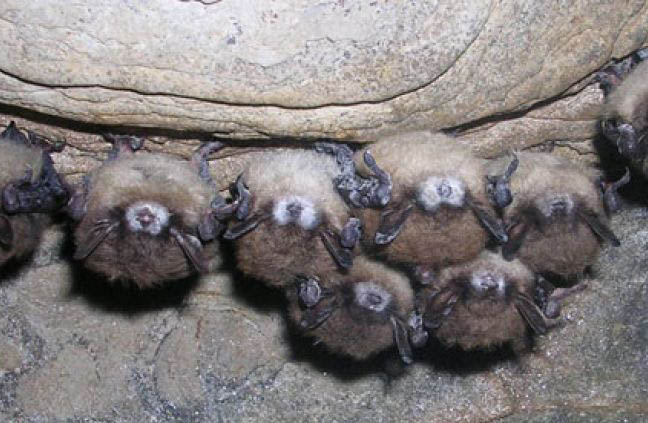
BATS: GOOD NEWS AND BAD NEWS

Yesterday I had planned to write about something having to do with garden design for “philosophy Friday”, but two pieces of breaking news took precedence. Fortunately and unfortunately, neither was an April Fools joke.

The good news is that it was officially announced that Bat, the fragrance I made for Zoologist Perfumes, is a finalist for the Institute ofArt and Olfaction Award! This is especially exciting because it was one of my all-time favorite projects.

The bad news is that there was a news article announcing that, for the first time, a bat with white nose syndrome was found on the West Coast, in Washington State. Of course I’m thrilled about Bat being a finalist for the prestigious IAO Award, but at the same time I’m deeply disturbed and saddened to hear that the fungal infection that has killed thousands of bats east of the Rockies has now spread to the West.

It seems that the fungus that infects the bats is normally and ubiquitously present in the ecosystem in many parts of the world, and has always been around. Only within relatively recent times, though, have an increasing number of bat populations in North America been sickened and killed by it. 

Most discussion on white nose syndrome seems to focus on keeping the public out of caves with hibernating bat colonies (a good idea!), creating captive breeding colonies that are free of the fungus in the hope that they can one day be released into a “clean” environment,  controlling the fungus itself, diagnosis of the disease, and/or treating existing infections. The prevailing theory seems to be that bats in the US have no resistance to an organism imported from Europe, reminiscent of the mass deaths of indigenous Americans from European diseases like smallpox several centuries ago. However, an additional underlying question is whether bats might have suddenly become susceptible to pathological infection by a benign organism that has been present in their environment for a considerable amount of time.

I can think of a whole host of factors that could affect the physiological state of bats, all of them ultimately traceable to human activity. There’s mass destruction of habitat by developers, widespread spraying of pesticides that may accumulate in the fat stores of hibernating bats and, of course, climate change. With warmer winters, it is possible that hibernation is disrupted, resulting in premature use of stored energy and near-starvation. Although the fungus thought to be responsible for white nose syndrome grows best in cold temperatures, warmer winters might optimize the temperature range of caves and promote growth of the fungus to the point where it overwhelms the bats’ immune systems.


Obviously these global factors, including the unprecedented rapid worldwide distribution of all human, plant, and animal diseases, are not easy to fix, especially given how far down the slippery slope the world has already slid, so it’s tempting for people to focus on treating symptoms and hoping that natural selection kicks in soon, creating bat strains that are resistant to infection. However, bats do not reproduce fast and many species need to live in large groups, so such a narrow and short-sighted strategy may not meet with success in the long run, especially if bat colonies are decimated to the point of unsustainability.

[Photos are from Wikimedia; bat and moon print by Biho Takashi ca 1910]